
Can Your Boat Go Electric?
Let’s Find Out.
Speak to us for straight answers on feasibility, costs and what’s involved in converting your boat to electric propulsion.
- Tailored to your boat and usage
- Clear costs and options
- No jargon, no guesswork
For electric conversion, explained properly, chat with one of our specialists.
Special Offer: Get 5% off your conversion by quoting TORKMARX when booking.
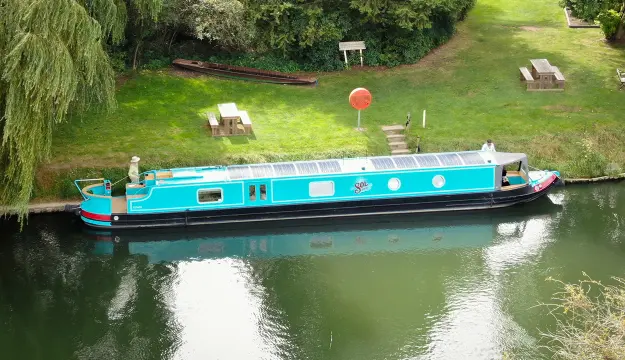

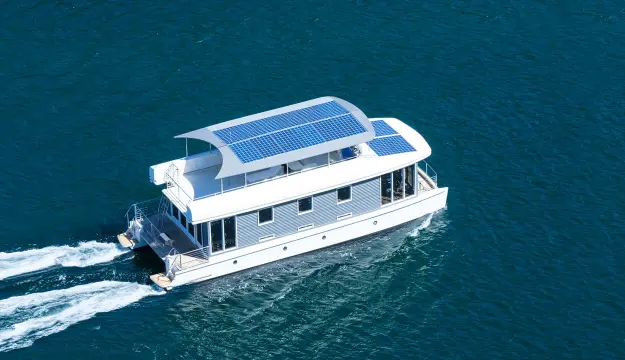
Real conversions. Real boats. Real advice.
- 15 Years of experience
- Extensive UK waterways knowledge

This consultation is for:
- Currently running diesel or petrol engines
- Planning a refit, upgrade or long-term ownership
- Interested in lowering running costs or futureproofing
- Wishing to minimise their environmental impact
In the consultation, we’ll cover:
- Whether your boat is suitable for conversion
- Recommended system options
- Realistic cost ranges
- Battery setup and charging options
- What the conversion process involves
Special Offer: Get 5% off your conversion by quoting TORKMARX when booking.

Why people are switching to electric?
- Quieter Cruising
No engine noise. Just the water. - Lower Running Costs
Less fuel. Less ongoing maintenance.
- Simpler Ownership
Fewer moving parts. Less to go wrong. - Future Ready
Aligned with where regulations are heading.
FAQs
How far can an electric boat travel on one charge?
The answer to this is very simple, mathematically speaking. Our narrowboats have a battery bank of 28.6kWh of which we can use up to 80% on an infrequent basis and 50% on a regular basis. 22.8kWh or 14.3kWh respectively. Or narrowboats use 1kW to move along at cruising speed. The actual speed through the water depends on factors such as how shallow the canal is which will reduce speed, however in good water conditions using 1kWh you should expect to travel about three miles.
Rounding up and just using 50% of the battery you therefore should expect to travel 42 miles.
However, because our boats have 2kW of solar on the roof, on a sunny day you can expect to generate 10kWh. This means that to travel the 42 miles you’ve only used 4.3kWh and your battery will be at approximately 85% right State of Charge (SOC).
Can I charge my boat using shore power?
Absolutely yes. Most marinas will have 240V power available which will enable you to charge your batteries. In fact, it is important that you charge your batteries in this way regularly so that your shunt (more about this later) is recalibrated. Victron, manufacturer of shunts, recommends that this is done every two weeks to maintain accuracy of the reading. There are also some public charging points available on the waterway but they are not as common as we’d hope and until this time we recommend that you have a generator.
How much Solar energy will the panels on my narrowboat produce?
This is a difficult question to answer but if we make some assumptions that your boat is not going to be overly shaded by trees and it’s not the world’s worst summer, conservatively and taking into account British weather, you can expect in summer months to generate on average 6kWh a day. In autumn and spring expect to generate approximately 3.5kWh a day and in the winter 1kWh a day. This adds up to approximately 1260kWh per year.
Find Out If Your Boat Can Go Electric
Get clear, honest advice before making any decisions.
Special Offer: Get 5% off your conversion by quoting TORKMARX when booking.
Sustainable propulsion for inland and coastal waters. High-torque electric motors, advanced lithium batteries, and unified power hubs. We simplify complex electrics for boat builders and DIY enthusiasts alike.
©2026 Torkmar Ltd. Company Registration No: 14490142
VAT No: 471474383