
Understanding Hybrid Marine Systems: Parallel vs. Series
Series Hybrid propulsion is often the most misunderstood concept in modern boating. Put simply, if your vessel has both an electric motor and a diesel engine (or generator) onboard, you have a hybrid. However, having two power sources is only half the story; how they connect to the water is what matters.
There are two distinct engineering approaches to this: Parallel Hybrid and Series Hybrid propulsion. Understanding the difference is critical for choosing the right system for your narrowboat or widebeam.
The Problem with Parallel Hybrid Systems
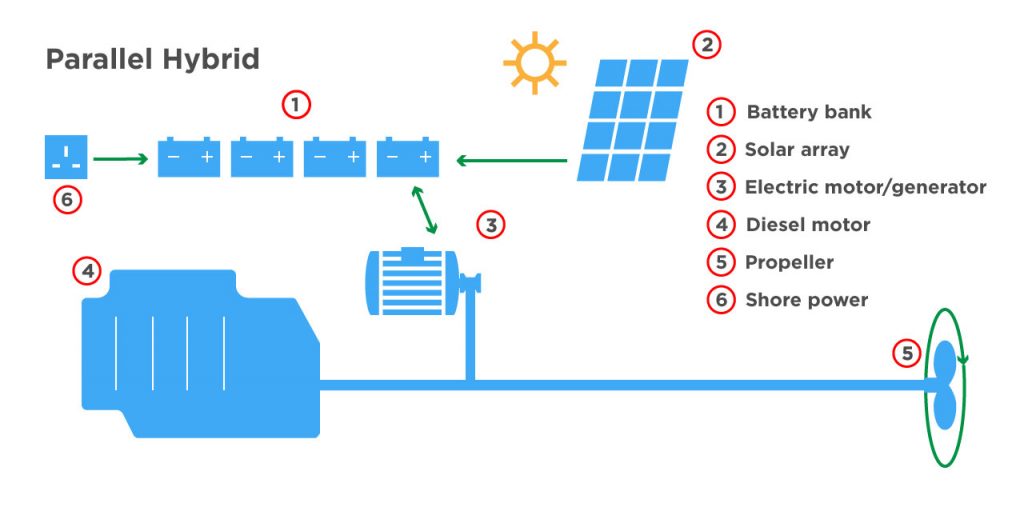
In a Parallel Hybrid system, engineers mechanically connect both the diesel engine and the electric motor to the same propeller shaft. You can drive the vessel using the diesel engine, the electric motor, or combine both for a power boost.
While flexible, this creates a significant “Propeller Compromise.” Because the diesel engine shares the shaft, you must use a smaller, standard propeller to prevent overloading the combustion engine. Consequently, this forces the electric motor to spin faster than is optimal. This setup effectively negates the efficiency gains of the “large prop, low RPM” philosophy that makes Törkmar systems so effective.
The Series Hybrid Propulsion Advantage
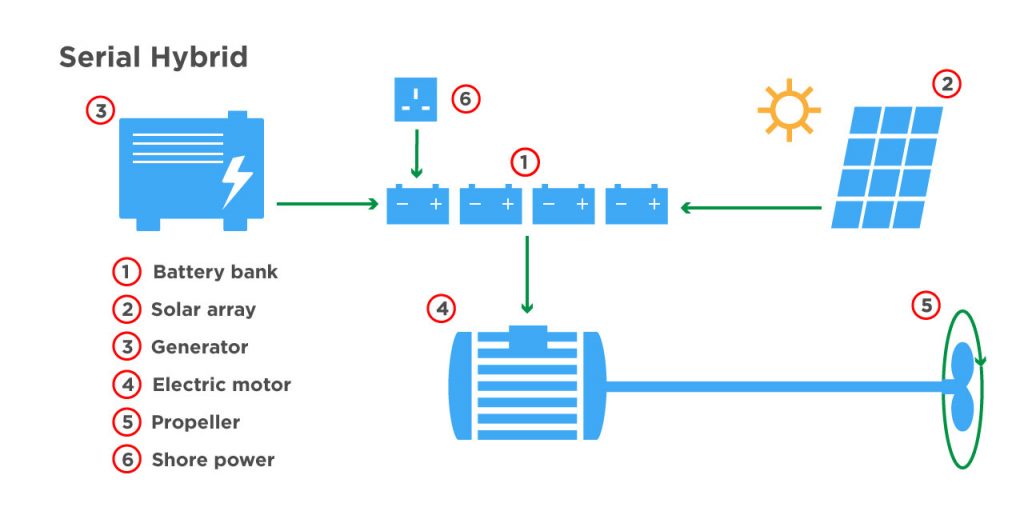
In contrast, a Series Hybrid propulsion system completely disconnects the diesel engine from the propeller shaft. The electric motor acts as the sole source of propulsion. The diesel engine transforms into a dedicated generator, running purely to charge the battery bank.
This decoupling offers a massive advantage. It allows you to fit a large, steep-pitched propeller optimized strictly for high-torque electric power. You gain maximum thrust and efficiency. Furthermore, the generator runs at its constant “sweet spot” to charge batteries efficiently, regardless of your boat’s speed.
For a deeper dive into propeller efficiency and torque curves, resources like The Engineering Toolbox offer excellent technical data.
Why Törkmar Chooses the Series Approach
For displacement vessels like narrowboats, Series Hybrid propulsion is the superior choice. It allows you to leverage the full benefit of the Törkmar torque curve.
By utilising a larger propeller and a dedicated electric drivetrain, you achieve a quieter, smoother, and significantly more efficient cruising experience. You become free from the mechanical constraints of a combustion engine.
To learn more about the best propeller for your boat, view our insights page or explore our Youtube series on how to ‘Convert your diesel narrowboat to electric’.